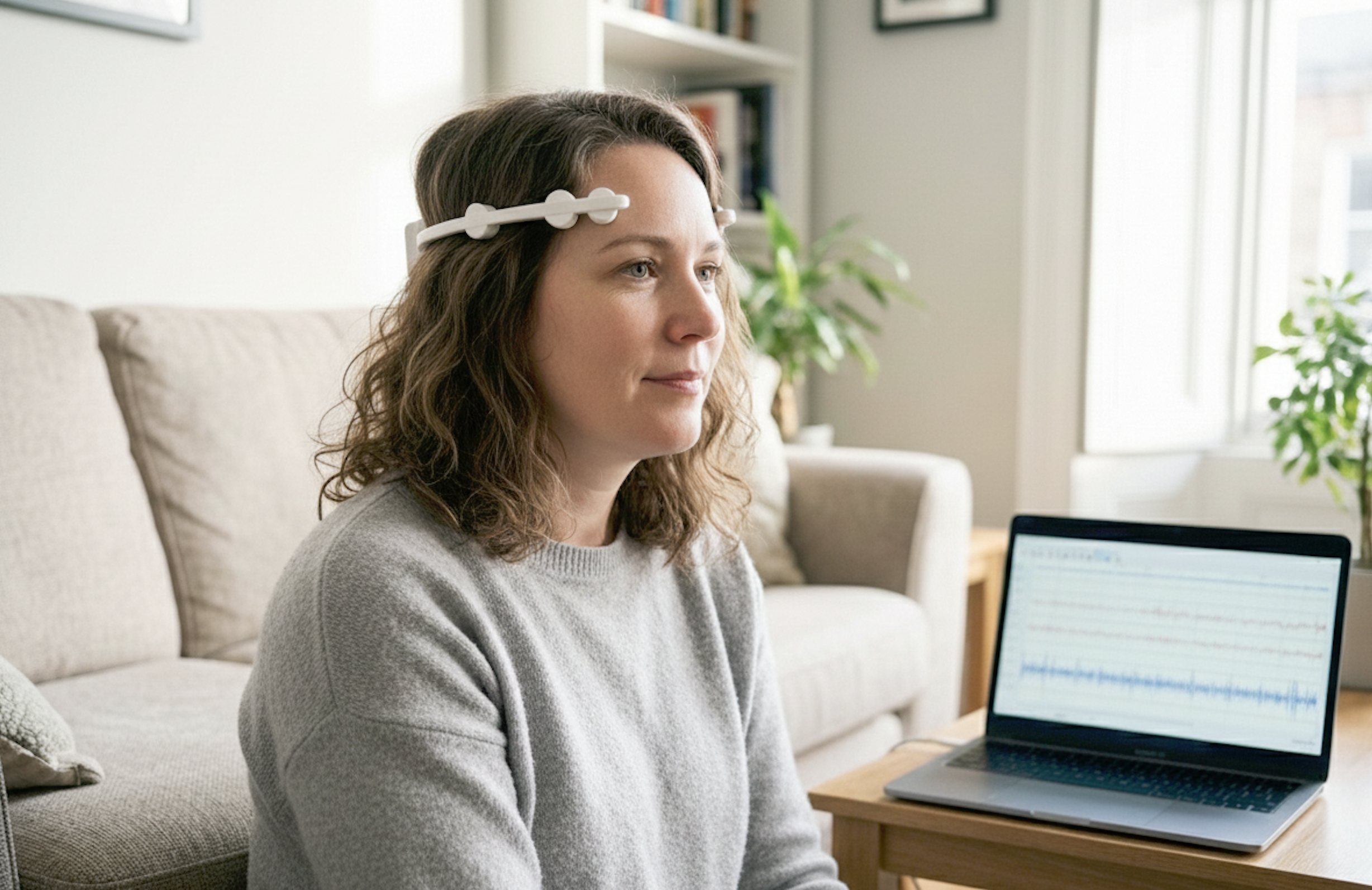
Prometeo Tiara is a portable EEG device designed to enhance neurophysiological follow-up in clinical and therapeutic contexts, with a particular focus on improving the frequency and practicality of electrophysiological monitoring in epilepsy-related care.
In neurology, medication adjustments often rely on clinical observation, seizure diaries, and patient/family reports, while specialized tests such as MRI are typically expensive and not repeated frequently due to logistics, waiting lists, and patient tolerance.
Prometeo Tiara's workflow is designed to be simple and accessible: it connects wirelessly via Bluetooth to a laptop and runs a brief acquisition protocol that includes baseline, calibration, and structured segments.
Fit the EEG headset and verify sensor contact and signal quality before the session begins.
Connect wirelessly via Bluetooth to a laptop and select a structured acquisition protocol.
Record EEG during baseline, calibration, and defined segments (e.g., rest, eyes open/closed).
Extract quantitative metrics (band power/ratios, segment trends) and export a brief clinical report.
In epilepsy, this approach aims to provide clinicians with a broader monitoring loop by enabling repeated EEG recordings to observe cortical electrical dynamics more frequently, in a way that is tolerable for the patient and comparable across sessions.
Rather than relying only on costly tests that are widely spaced over time, Prometeo Tiara introduces quantifiable measures: EEG traces with signal-quality indicators, segmentation by task/condition (e.g., rest, eyes open/closed, guided exercises), and spectral analysis (e.g., delta, theta, alpha, beta, and gamma band power, band ratios, and longitudinal trends).
This does not replace clinical evaluation or produce automatic treatment decisions, but it can provide additional measurable evidence to discuss progression, treatment response, and electrophysiological change over time.
Clinical note: Prometeo Tiara is intended as a complementary measurement and monitoring supportive/research tool. It is not a standalone diagnostic system, and any therapeutic or pharmacological decision must be based on comprehensive medical evaluation, clinical context, and validated protocols.